


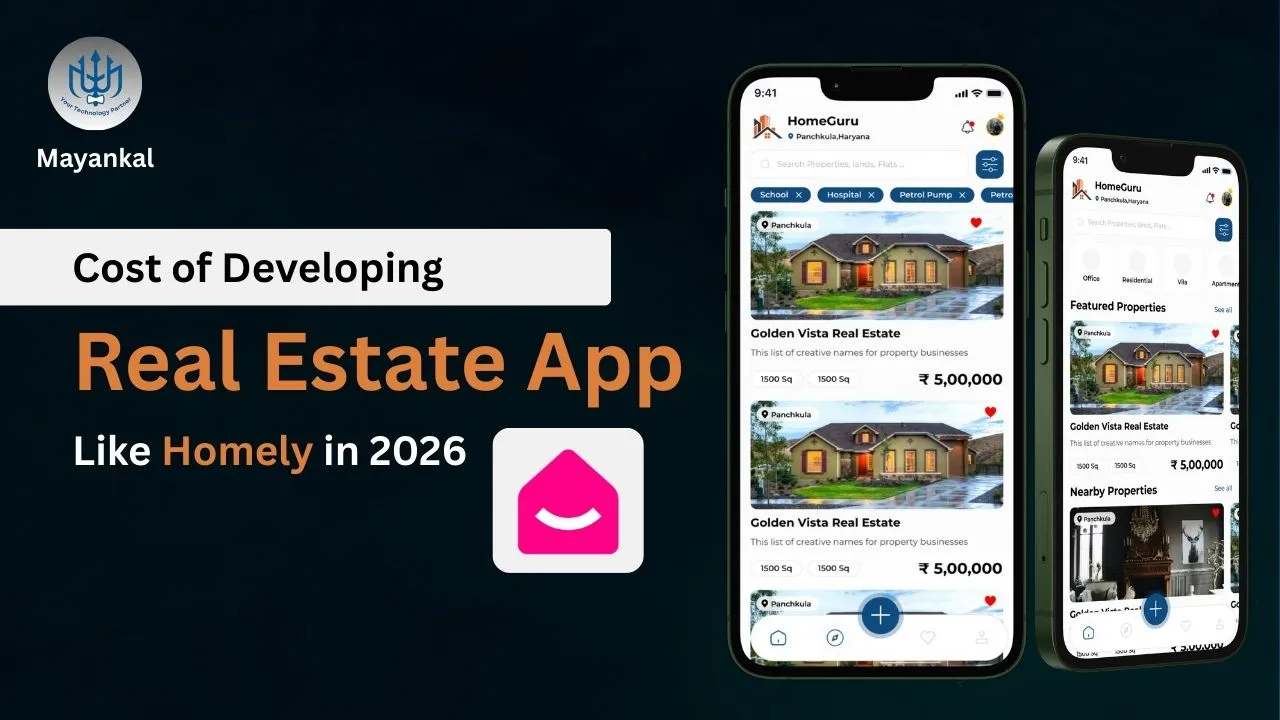
Homely Property App is the next generation of an all-in –one real estate app and is available for both mobile and web that brings together buyers, renters shop owner and agents into one unified platform effortlessly. It provides users the ability to search for property, view details, book a visit and directly call or message the owner or agent.
The app has smart filters, map search, picture galleries, repair requests and even secure messaging to create an enjoyable user experience. Business wise, admin panel for handling listings, user roles, pricing, analytics and monetization capabilities.
We develop custom and white label real estate platforms like Homely Property, easy-to-use at scale with functionality suited to target market and business model.
App Feature
Schedule Meeting
18 Hrs
Simple booking system for property visits and meetings.
Currency Converter
13 Hrs
See property prices in your chosen currency.
Enhanced Security
24 Hrs
Protect information with encryption and access controls.
Interactive Map View
59 Hrs
View properties with location-based mapping
AI-Based Recommendations
79 Hrs
Personalized property suggestions with the help of AI.
Safe Messaging System
28 Hrs
Secure in-app conversations.
Apartment Details
23 Hrs
Featured listings with photos and details.
Push Notifications
29 Hrs
Notification in real-time when listings or price updates.
Favourites
8 Hrs
Easily save and manage favourite properties.
Mortgage Calculator
14 Hrs
Fast EMI calculator based on loan details.
Social Media Integration
8 Hrs
Sign in and post listings on social networks.
Advanced Property Search
39 Hrs
Intelligent filters for price, location and amenities.

Major Factors that can affect development Cost
The more services affect the development cost. Any additional module gets new workflows, backend logic, API’s, attractive UI screens, app testing, and admin controls panels, and thus impacts your time to code.
Developing solely for Android costs less, but supporting iOS and web platforms involves additional UI work or modifying existing code so that the same interface can be used across platforms, as well as platform-specific testing which translates into more development effort and a bigger budget.
Advanced filters such as circling properties around location, budget, amenities and property type need efficient query structuring along with backend logics which makes development difficult and their performance tuning and implementation costs also rises.
Good UI / UX ( Custom layouts, animations, visuals ), creation of design requires + Frontend is complex which means long time for the design process as well which results in higher development cost in any case.
For an app we need for configuration, security validation and testing of components whether it is a mapping tool, chat system, analytic tools, payment gateway or CRM platform. All this contributes to make any development really complicated and expensive.
An application that features a huge database of properties and high user traffic then you need cloud-based scalable architecture, optimized data handling and load balancing which increases the initial development cost but it is essential to make them stable.
This cost is heavily driven by the kind of app developing. See, an MVP tends to have fewer features and a faster launch, while for high-level apps (advanced -enterprise), you need the additional complexity in the workflow, how to scale on demand, security enhancements, and extra testing effort.
Your AI tool of choice, framework, and model will impact development time and cost. AI functionalities such as predictive analytics, personalization, or recommendation engines are demanding on resources — skilled ones at least. And require data processing and the right computational infrastructure.
Development expense is location-dependent for the team. Rates vary by region but also depend on labour costs, the availability of expertise, and time zone coverage – all of which affect project budgets and delivery schedules.
Maintenance after the project is configured, such as bug fixing, feature patches, Security patches, and performance optimization. Updates are a must to be competitive and adhere to the laws, and they come with costs for as long as your app is active.
Modules
.webp)
Real Estate User
The User App allows buyers and renters to search through the listings, refine search results, browse property details, save favourites, and connect with the agents. It is all about simplicity, quick navigation, and smooth interaction in order to guide the users to get the properties that suit their needs.
User App
The User App allows buyers and renters to search through the listings, refine search results, browse property details, save favourites, and connect with the agents. It is all about simplicity, quick navigation, and smooth interaction in order to guide the users to get the properties that suit their needs.
Agent App
.webp)
The Agent App will enable real estate agents to register, list the property, post media, manage leads, and communicate with potential clients. The agents are able to update property information and monitor requests, which enhances their working process and interaction with clients on the site.
Admin Panel
.webp)
The Admin Panel enables administrators to manage all administrative functions of the platform, such as approving agents, administering listings, user tracking, and activity monitoring. It also has analytics, user, and property overseer dashboards to have a smooth operation.
Member’s Required In Team

UX/UI Designer
The UI/UX Designer works to design a beautiful and simple experience interface. Their aim is to create a seamless experience for the customers and the vendors. They create flows, layouts and interactions that lead to better engagement and conversation making the navigation simple while their application feels intuitive to any device (android or iOS).
.png)
Frontend Developer
The Frontend Developer is responsible for developing the visual aspects of website application. They develop the interface to be snappy and make the design concepts work which feels good on screens, helps perform better and push a consistently good experience across the web and mobile for the users.

Backend Developer
The Backend Developer is responsible for the server-side logic as well as the database architecture. They want to make sure the app handles data in a secure way and perform with fast performance, along with avoiding any interruptions. They build APIs, handle customer data and orchestrate bookings and payments — all the while ensuring an enormous system remains reliable as the app scales.

Mobile App Developer
Mobile App Developers who will create the core features of our mobile app for Android and iOS. They aim to provide you with a fast, stable and scalable app experience. They also write clean code, add features, optimise performance and properly ensure that an app works smoothly on various devices and operating system versions.

Project Manager
The Project Manager manages the process of app development from planning through launch. They make sure this project is not slipping offline and eventually manage resources and a good flow of communication between teams. They work to translate the business needs into action items and ensure the project is delivered on time, within scope, and within budget.

QA & Testing Engineer
The QA & Testing Engineer makes sure the app runs like clockwork prior to its introduction. Their aim is to catch the bugs, the performance issues, and the usability problems at an early stage. They perform manual and automated testing, test features, and make sure that the mobile app is a seamless experience without any bugs for the users.
Technologies





.png)


Development Time
4 Months
$7,000
Basic App

$12,000
Medium App

$30,000
Complex App
Faq
The expense of creating a real estate app like Homely in 2026 will depend on the functionality, as well as the platforms and technology stack used. A simple MVP can be much lower, and a complex app with AI, real-time search, and integrations will need a higher budget. Other factors, such as user interface complexity, backend architecture, and third-party APIs, also have an effect on the pricing. And the companies should be pricing costs for long-term scale, not just for the beginning of development.
Agenda modules, such as property search, map integration, user profiles, favorite management, schedule a visit, and notifications, significantly affect the cost of development. Add more functionality like Artificial Intelligence (AI) recommendations, price prediction, mortgage calculators, and multi-language support, which all add to the complexity. The more enriched and complex the functionalities are, the more interactive and data-driven they are, the cost of development increases as backend logic, including optimization and testing, becomes intricate.
Yes, platform degree drives cost to a large extent. Native apps for both iOS and Android cost more to develop than cross-platform ones. But the performance and degree of customization that native apps can provide might be even better. Web Apps or hybrid applications are lower cost to start with, but can limit sophisticated integration. It depends on the target audience, budget, and performance expectations when selecting the proper platform.
AI-driven features such as smart property recommendations, price prediction, chatbots, and fraud detection need further development time. Some of these are based on data processing, model training, testing, and continuous optimization. AI, like any technology requires good developers, in this case, software infrastructure, which adds to the up-front costs of development as well as long-term operational costs. But features powered by AI can deliver much better user experience and business value.
For most startups, the best way to go live with an app for the real estate industry is to build a MVP. Mature businesses will eventually build such a system, but they don't start that way since it's too much to implement all at once. An MVP would concentrate on essential stuff like listing, search, and user accounts, and this allows businesses to quickly validate the idea. It's a way to mitigate costs at the start and get a little use-case feedback before scaling. And, after validation, the other features could be implemented step by step, gradually reducing development cost.
UI/UX are the main points of integration in the real estate app development process, as clients want them to deliver rich content and easy navigation. Good design (the kind that people want to look at and use) includes user research, wire-framing, prototyping, and testing. Elements such as complex design (animations, layouts, etc.) or personalized user flow boost the time required to design and develop. Good UI/UX investment in the initial stage may be a little bit costlier, but it is good for user engagement and retention.
Yes, development costs do vary a lot depending on the location of the developers. They have different hourly rates all over the world as labor and marketing conditions vary for teams in different nations. Cheaper regions can cut back on budget, experience, communication and quality as well. Choosing a team with real estate domain expertise often provides better long-term value than focusing on cost alone.
Post-launch expenses consist of maintenance, server hosting, security patches, bug fixes, and feature improvements. Real Estate apps also need to be updated often in order to remain OS compliant and user-friendly. If artificial intelligence is to be applied, then continuously updating data and re-training models will be an ongoing cost. Derived from planning for maintenance, this gives long-term stability and performance.
The time depend on the work scope and complexity. An MVP can be developed in a couple of months, and an app with lots of features — longer because of design, development, testing, etc (and integrations). Copy management of AI features, third-party APIs, and support for multiple platforms adds to this overall timeline. Time and cost can be well controlled by planning the project & phased development.
Yes, if you prioritize features, use cross-platform frameworks and start with an MVP. Reuse of components, using a proper technology stack, and good requirement planning minimizes rework and delays. Working with a professional development squad also cuts down on wasted costs.