
In 2026, mobile app development is changing at a breakneck pace as businesses increasingly require quicker time to market with faster performance, acceleration of experiences, greater scalability, and easier access. It’s no longer just a technical nuance — it will be making your technical choices, you’re also making long-term business choices about how long it takes to get to market, whether the product can grow with its user base and how much development and maintenance is going to cost. At Mayankal Technologies, we help companies make the right choices in this new playing field by using business homework and technical knowledge to pick the right tools for success in the modern app store.
The best mobile app development frameworks of today have cross-platform features, native-like performance and fast iteration periods. And those trends derive from industry insights revealing already-popular workflows that maintain speed, flexibility, and community support.
What Is a Mobile App Development Framework?
A mobile app development framework refers to a collection of tools, libraries or Services that define the structure of your application, provide pre-written code for common patterns and functionalities on mobile applications and give you access to your OS API ( Camera, GPS Location, etc), in short, help developers build apps faster. Frameworks abstract the common tasks such as UI rendering, data storing, network requests, and platform interaction. The correct framework can lower cost, make updates easier, and increase long-term maintainability.
In 2026, though, the framework selection is a matter beyond pure performance. It needs to have rich UI, cloud services, the ability to integrate with AI and a consistent user experience on both Android and iOS busty3d games.
Top Mobile App Development Frameworks Dominating 2026
Flutter
Flutter is still one of the most sought-after cross-platform frameworks in 2026. Flutter delivers smooth, natural scrolling interfaces by way of its custom rendering engine. With a high iteration speed, it’s no wonder brands like Alibaba see the advantages Flutter brings to both startups and enterprises.
The fact that Flutter can shave substantial time off mobile app development, without giving up too much in terms of platform-specific performance (assuming your app is well-written), is a big reason why businesses are still reaching for it.
React Native
Despite uncertainties, React Native is still a top choice for cross-platform applications due to its stable ecosystem and enormous developer community. Created by Meta, React Native allows developers to write a single flavor of JavaScript (or TypeScript) that wraps the machinery of Android and iOS with nearly native performance.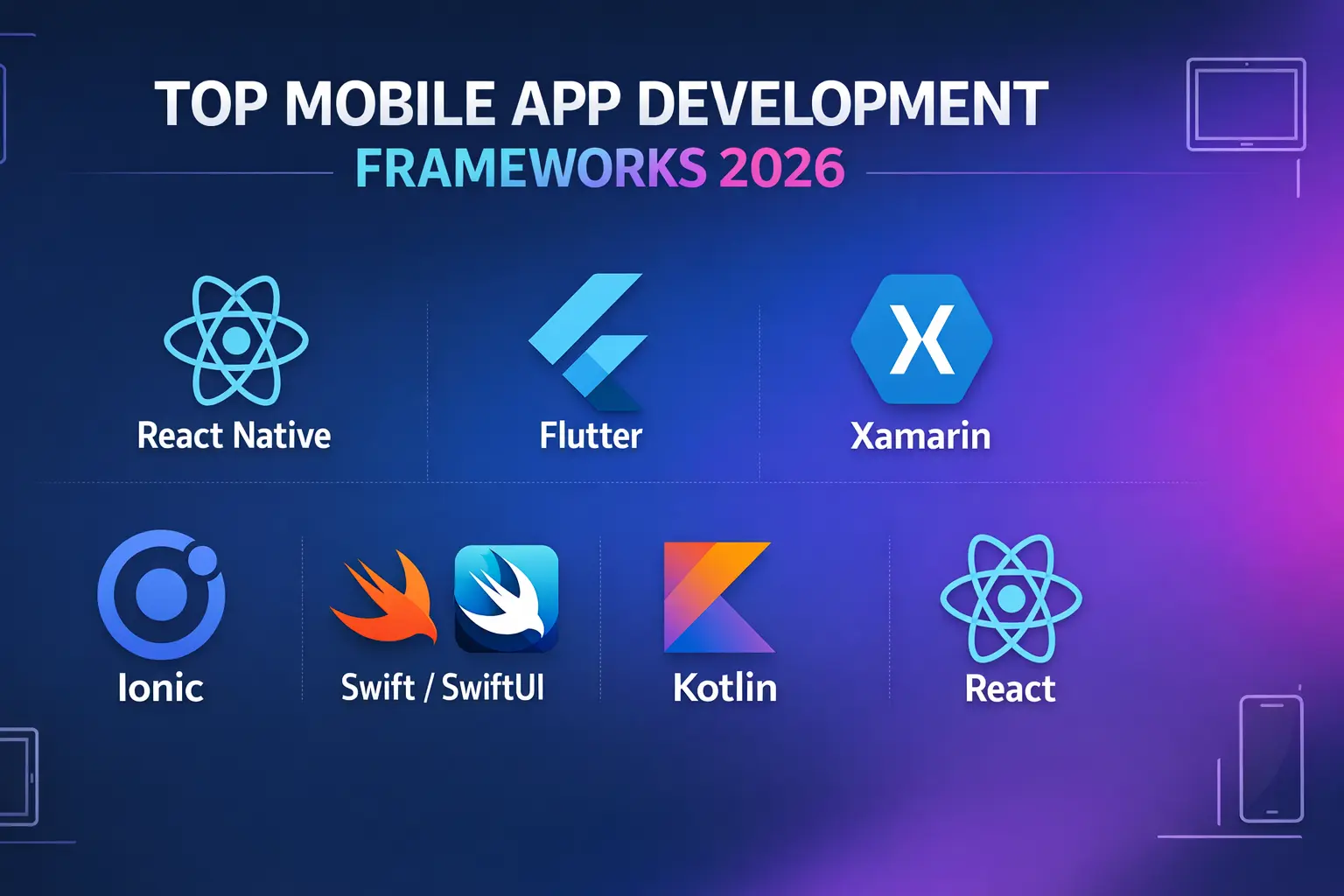
React Native is particularly attractive for teams already comfortable with web technologies and JavaScript, allowing shared logic between the web and mobile. Because then you can update all the time, and because it is so widely used (because Google supports it), it's a pretty safe choice for many mobile app development company that need lots of updates and a lot of user familiarity with complex setups.
Kotlin Multiplatform
Kotlin Multiplatform is a framework that is definitely gaining in popularity and reflects how contemporary development of sharing business logic across platforms with full native UIs. Instead of shoehorning shared UI code, it enables teams to reuse core logic by constructing native UI experiences with platform-specific tools such as Jetpack Compose or SwiftUI.
This pattern is attractive to businesses desiring near-native performance and customization, without the need for duplicating business logic. Kotlin Multiplatform is the logical approach to use with Android, iOS, web, and Desktop for large projects.
SwiftUI and Jetpack Compose
As of 2026, native frameworks are still failing. SwiftUI of iOS and Jetpack Compose of android are both examples of modern UI development libraries. These are patterns that make it easier to describe user interfaces in code.
SwiftUI is deeply integrated with Apple’s ecosystem, and Jetpack Compose (which is part of the Android toolkit) makes it easier to develop UIs in Android apps. Each framework improves performance and minimizes boilerplate, all while retaining full access to the platform features.
Progressive Web Apps (PWAs)
Progressive Web Apps remain valuable for companies that want mobile experiences without maintaining separate native apps, especially when guided by an experienced mobile app development company. PWAs operate directly in the browser and provide responsive design, offline support and push notifications. Not perfect in every case, they are cheap and easy to implement, especially for content-centric applications.
Other Frameworks Worth Watching
With those caveats though; Flutter, React Native, and Kotlin Multiplatform are leading the pack here, with a mixed bag of other frameworks chiming in based on particular requirements. For projects where knowledge of web technologies and quick prototyping is important, frameworks like Hybrid (Ionic, NativeScript) make sense. Unity is still first choice for interactive 3D applications (i.e. games, or AR experiences).
Cross-Platform vs Native Frameworks in 2026
Most businesses in today’s world are left to select cross-platform and native development. Cross-platform frameworks like Flutter and React Native allow for rapid development and a wide reach without the need for separate codebases for Android and iOS. Native frameworks such as SwiftUI and Jetpack Compose, on the other hand, provide the highest possible performance and a deep integration with their platform when application complexity or advanced capabilities are at stake.
The trend leans towards hybrid strategies — using a cross-platform framework when it’s all about performance or exclusive platform features.
Choose the Right Framework for Your App
The right excuse for using the best framework depends upon your business goals, timeline, development cost and long term vision. At Mayankal Technologies, we consider all these factors before proposing a framework.
Ask these questions when deciding:
- Are you seeking cross-platform reach or native functionality?
- How intricate is your business logic and UI?
- How soon do you need to start?
- Do you need AI, real-time features or cloud services in the app?
Knowing these requirements also enables us to pair your project with the right framework and approach to development. More than just technical fit, you also need to consider future updates and ongoing maintenance.
A working framework today should be able to accommodate new features on a regular basis, as well as security and performance updates when user expectations change. Selecting a framework with robust documentation, active community support, and long-term stability also minimizes risk during development while ensuring your app can scale alongside your business.
Why Mayankal Technologies Recommends Modern Frameworks ?
At Mayankal Technologies, our focus as a mobile app development company is on the future of mobile apps, and we are very much looking ahead. We don’t follow the hype but instead consider frameworks in terms of the actual needs of a project, expertise among team members, and long-term business value.
We have developed on top frameworks such as Flutter, React Native, Kotlin Multiplatform, SwiftUI, and more. We will assist our clients in selecting tools that will ensure a fast, scalable, maintainable, and engaging user experience within their budget and timeline.
Be it a startup Minimum Viable Product (MVP) or a huge enterprise solution – we do not make you adopt our tech stack; we build for your business needs and growth strategy.
Final Thoughts
Mobile app development frameworks are better, quicker and more flexible in 2026. Leaders in this crowded cross-platform space include Flutter and React Native, while businesses can also turn to burgeoning native tools like SwiftUI and Jetpack Compose. Type and pace of performance, as well as future intentions, should influence the best selection.
Choosing the right framework is key to achieving success in a mobile app development world. If you’re thinking about developing a mobile app at any time in 2026 and beyond, We can help you make an informed choice to develop a high-quality product that will distinguish itself in the market.
Frequently Asked Questions (FAQs)
Why is it important to choose the right mobile app development framework in 2026?
By 2026, mobile apps will be quicker to access, more secure, and scalable. The right framework has such a direct effect on app performance, code development speed, ease of maintenance, and user experience. In an era of cutthroat competition and demanding users, choosing a framework that is future-ready lets businesses remain flexible and adjust more easily to new technologies.
What criteria should an enterprise consider when choosing a mobile app framework?
App complexity, performance expectations, platform coverage, dev budget, and long-term scalability all matter so much. Businesses should also take into account how much community support there is, the regularity of updates, third-party integrations, and the degree to which the framework fits with the business’s product roadmap.
Is cross-platform the best framework of 2026?
Learning Progression Frameworks are now mature enough, and usually preferable for faster development/cost cutting there. They enable the same codebase to run across multiple platforms, all while performing close to native. But the native development can still be appropriate when it comes to deep hardware access or platform-related features for apps.
What are the ways through which the latest frameworks enhance apps' performance?
Today's mobile app frameworks employ optimized rendering engines, efficient state management, and better compilation techniques. Performance gaps between apps built natively and those created cross-platform have decreased with many frameworks offering more native API access. This will make for smoother animations and faster load times, in addition to overall better touch responsiveness.
Are mobile app development frameworks suitable for large-scale applications?
Yes, a lot of the hypes in 2026 is made to tackle enterprise apps. They are ideal for modular components, scalable codebases, and cloud sync logic. When designed and architected well, these frameworks can scale to millions of users without a performance drop.
Hi, I’m Akhil Kumar Srivastava, Founder & CEO of Mayankal. We’re a team of highly skilled developers helping startups and established companies transform powerful ideas into successful digital products. We build high-quality websites, mobile apps, AI-driven tools, and full-scale SaaS solutions.
Our Blog
Explore Our Latest Multi-Location
Marketing Insights

11 May 2026
How Much Does LMS Development Cost in India in 2026?

Akhil Kumar Srivastava

17 Apr 2026
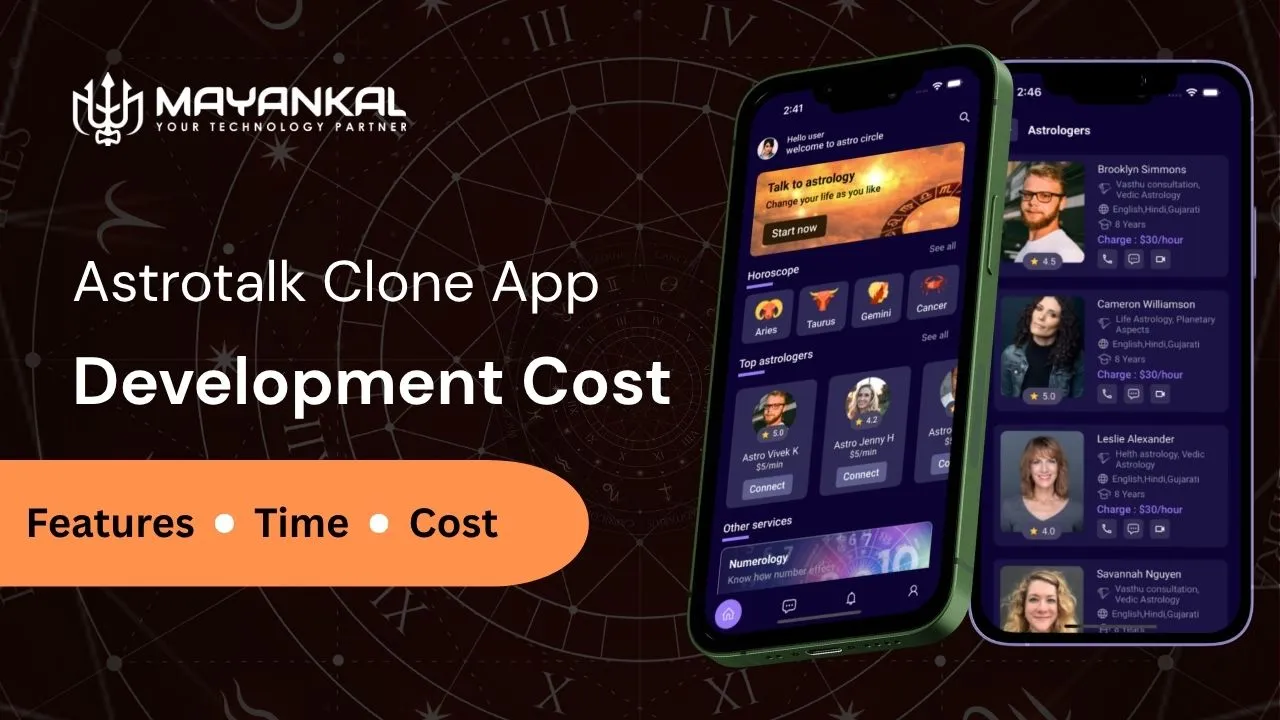
Cost to Develop an Astrology App Like Astrotalk in 2026
Akhil Kumar Srivastava
04 Apr 2026
Top 10 No-Code Tools for Mobile App Development in 2026
Akhil Kumar Srivastava

23 Jan 2026
Detailed Guide on AI Agent Development Cost in 2026
Akhil Kumar Srivastava

09 Jan 2026
Gojek Business Model Complete Guide
Akhil Kumar Srivastava