
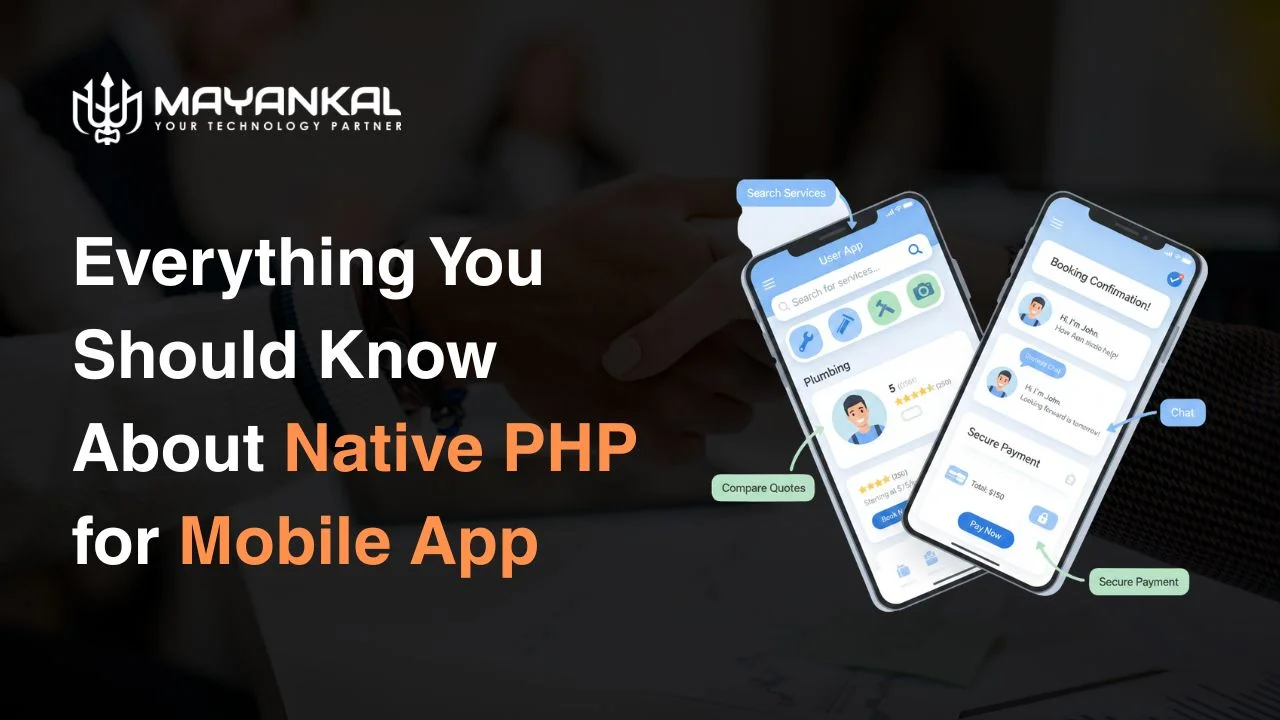
The way developers build applications is evolving fast, and one concept gaining serious attention is Native PHP for Mobile. Traditionally, web developers have tied PHP to web development. Still, by 2026, the landscape changes noticeably. PHP is expanding past browsers into mobile and web applications.
This shift is not just a trend. It reflects how developers want faster workflows, fewer languages, and more flexibility. If PHP already powers the backend, why not use it across the entire application?
This guide breaks down everything worth knowing about Native PHP, how it works, where it fits, and whether it is worth adopting.
What Is Native PHP?
Native PHP means running PHP outside a web server to build desktop and mobile apps.
Instead of only making HTML for browsers, PHP can power full apps that run on devices.
Tools and frameworks that bundle PHP with a runtime environment make this possible. These tools allow developers to create interfaces and interact with system-level features like files, notifications, and even hardware.
In simple terms, Native PHP lets developers build apps without switching languages.
How Native PHP Works ?
Native PHP works by combining PHP with technologies that bridge the gap between backend logic and user interfaces.
Here’s how it typically functions:
- The app includes a PHP runtime.
- Web tools or native wrappers build UI layers.
- APIs link PHP logic to device features.
- The app runs as a standalone program on mobile or desktop
This architecture removes the need for a separate backend in many cases. Everything can live inside a single php code base.
Native PHP Release Timeline
The idea of Native PHP has existed in test forms for a few years, but it gained support recently. Tools based on Laravel helped drive this shift.
- Early experiments: Around 2022–2023
- Growing adoption: 2024–2025
- Mainstream discussion: 2026
No single product determines the Native PHP release date. Instead, it represents a shift driven by multiple tools and frameworks evolving together.
Why Native PHP Is Gaining Popularity
Several reasons explain why developers are exploring the PHP version more seriously in 2026.
1. Single Language Workflow
Developers can use PHP for backend and app logic. This cuts complexity and speeds up development.
2. Faster Development Cycles
No need to switch between multiple technology stacks. Projects can move from idea to execution much faster.
3. Cost Efficiency
Teams don’t need specialists in many languages. A PHP-focused team can take on more tasks.
4. Laravel Ecosystem Support
Frameworks like Laravel make it easier to use PHP in new areas, like mobile apps.
Native PHP for Mobile Development
The idea of native PHP mobile app development is a reason for the buzz.
Developers can now build apps using PHP logic with mobile frameworks or wrappers.
Key Capabilities
- Access device features like storage and notifications.
- Build UI using modern frameworks
- Package apps for Android and iOS
- Cut reliance on heavy JavaScript stacks.
This approach is especially appealing for teams already working heavily with PHP.
Native PHP Mobile App for Android
Android is currently the easier platform for Native PHP experiments.
Why?
- Open ecosystem
- Flexible packaging options
- Easier integration with external runtimes
A native PHP mobile app for Android can use a hybrid approach , manages the logic. A wrapper manages the interface.
This makes Android a good starting point for testing Native PHP ideas before expanding to iOS.
Is Native PHP Free?
A common question is whether Native PHP comes at a cost.
The short answer is that it is generally free.
- PHP itself is open source
- Many supporting tools are free or community-driven
- Some advanced frameworks may offer paid features
When considering whether native PHP is free, the answer ultimately depends on the tools and resources selected. The core technology remains free, but enterprise-grade solutions might involve costs.
Native PHP vs React Native
One of the most important comparisons in 2026 is Native PHP vs React Native.
React Native
- Uses JavaScript
- Strong community support
- Mature ecosystem
- Optimized for mobile apps
Native PHP
- Uses PHP
- Still evolving
- Easier for PHP developers
- Less mature for mobile
Key Difference
Engineers built React Native for mobile development. NativePHP for mobile is also growing in this space.
If your team already uses PHP, NativePHP can cut the learning curve. But React Native still leads in performance and ecosystem support.
Laravel Native Mobile App Development
Laravel plays a significant role in pushing Native PHP forward.
A Laravel native mobile app approach allows developers to:
- Use Laravel for app logic
- Integrate with mobile wrappers
- Reuse backend code
- Maintain a unified architecture
This makes Laravel not just a backend framework but a foundation for full application development.
Advantages of Native PHP
1. Familiar Environment
PHP developers can work without learning a new language. This cuts onboarding time and helps teams start building right away.
2. Unified Codebase
Backend and app logic can live in one codebase. This makes development simpler, cuts duplication, and eases maintenance over time..
3. Faster Prototyping
Projects can be built and tested quickly. Developers can turn ideas into working prototypes in less time, which is especially useful for startups and MVP development.
4. Lower Development Costs
You need fewer tools and resources.Teams don’t need specialists for many technologies, which helps lower development costs.
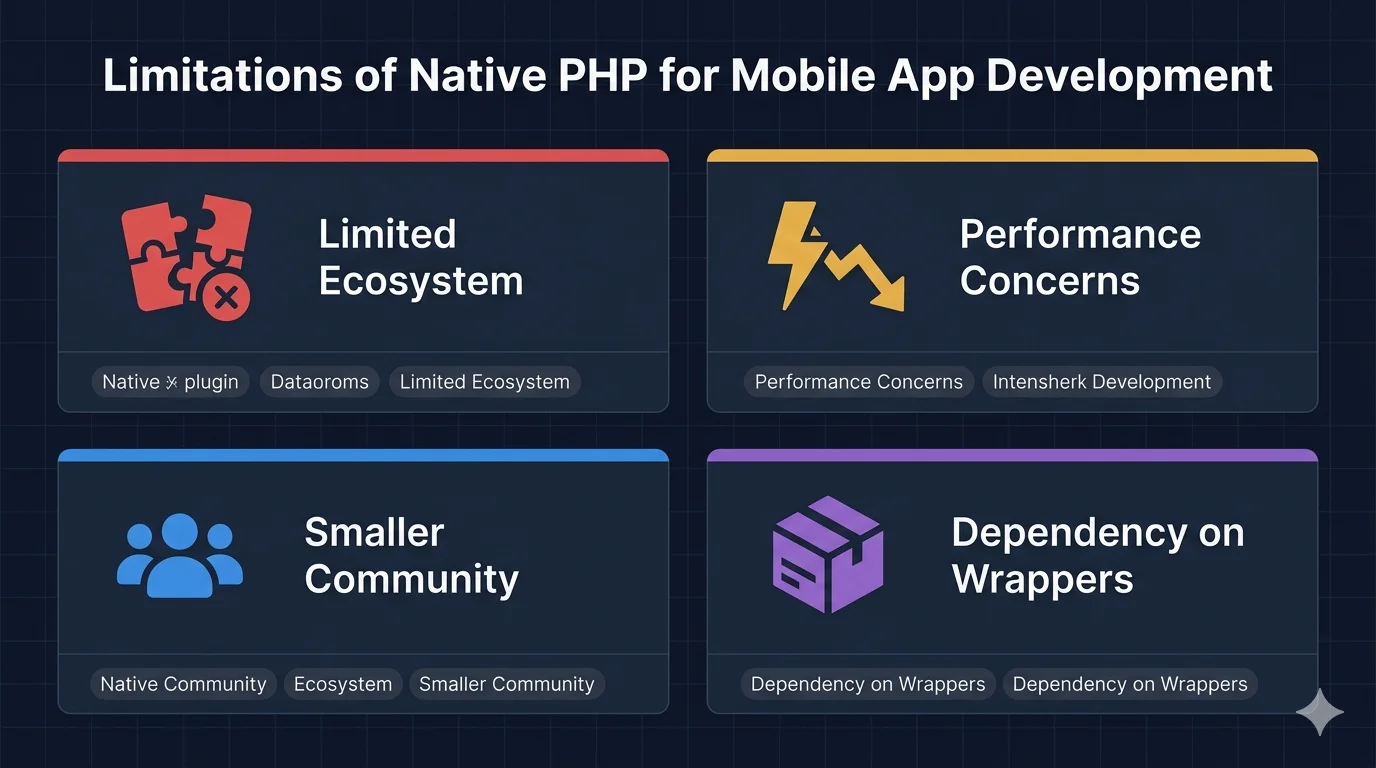
Limitations of Native PHP
1. Limited Ecosystem
Compared to established frameworks, it is still less mature. It has fewer plugins, libraries, and ready-made solutions. This can slow development on complex projects.
2. Performance Concerns
It may not match fully native mobile performance in all cases. Apps that need heavy processing or high-end graphics may have limits. This tends to occur more often than with native apps. Also more likely than with well-optimized cross-platform frameworks.
3. Smaller Community
Fewer tutorials and resources are available. This can make troubleshooting harder, because developers may not find quick fixes or community help.
4. Dependency on Wrappers
Most solutions still rely on external tools or wrappers to function. This adds an extra layer of complexity and can sometimes lead to consistency or stability issues.
When Should You Use Native PHP?
Native PHP is not a one-size-fits-all solution. It works best in specific scenarios.
Ideal Use Cases
- PHP-heavy development teams
- Rapid prototyping projects
- Internal business tools
- MVP (Minimum Viable Product) development
Not Ideal For
- High-performance mobile apps
- Complex gaming applications
- Projects requiring deep native integration
Future of Native PHP in 2026 and Beyond
Native PHP is still in a growth phase, but its future looks promising.
Here’s what can be expected:
- Better tooling and frameworks
- Improved performance
- Stronger community support
- More enterprise adoption
In the long term, as development trends shift toward simplicity and efficiency, Native PHP fits that direction well.
How Mayankal Technologies Approaches Native PHP ?
At Mayankal Technologies, the focus is always on using the right technology for the right purpose.
Native PHP is explored as part of a broader strategy that includes:
- Scalable application development
- Cost-effective solutions
- Faster time-to-market
- Future-ready architectures
.webp)
Instead of forcing trends, this approach looks at where Native PHP adds real value in web apps. It also notes where traditional methods still work better.
Best Practices for Native PHP Development
To get the most out of Native PHP, certain practices help maintain quality and performance.
1. Keep Code Modular
Avoid mixing too many responsibilities in one place.
2. Optimize Performance
Minimize unnecessary processing to keep apps responsive.
3. Use Reliable Tools
Choose frameworks and libraries that are actively maintained.
4. Test Across Devices
Ensure consistency with different screen sizes and OS versions.
Final Thoughts
Native PHP opens new doors for developers who want simple tools and flexible options.
It brings PHP into areas once led by JavaScript and other languages.
While it is still evolving, it already adds real value for some use cases. This is especially true for teams that rely a lot on PHP.
For businesses and developers, the key is not to chase trends blindly but to understand where Native PHP fits best. When used correctly, it can reduce complexity, save time, and streamline development workflows.
As 2026 unfolds, Native PHP is no longer just an experiment. Becoming a serious option worth considering.
Hi, I’m Akhil Kumar Srivastava, Founder & CEO of Mayankal. We’re a team of highly skilled developers helping startups and established companies transform powerful ideas into successful digital products. We build high-quality websites, mobile apps, AI-driven tools, and full-scale SaaS solutions.
Our Blog
Explore Our Latest Multi-Location
Marketing Insights

11 May 2026
How Much Does LMS Development Cost in India in 2026?

Akhil Kumar Srivastava

17 Apr 2026
Cost to Develop an Astrology App Like Astrotalk in 2026
Akhil Kumar Srivastava
04 Apr 2026
Top 10 No-Code Tools for Mobile App Development in 2026
Akhil Kumar Srivastava

09 Jan 2026
Gojek Business Model Complete Guide
Akhil Kumar Srivastava

23 Jan 2026
Detailed Guide on AI Agent Development Cost in 2026
Akhil Kumar Srivastava