
Have a special idea for an application, and are afraid that someone will steal it? That concern is valid. In the current day and age of swift digitalization, intellectual property protection is no longer a choice. In 2026, when you are going to patent the ideas of mobile apps to be used, it would be sufficient to know how to do it, so as to save time, money, and even unnecessary troubles in legal matters.
This guide is a walk-through on all that you need to know, starting with simple requirements to the actual filing process, and practicality is made towards India and global standards.
Why Patent Your App in 2026 Matter?
Competition in the app market is greater than ever. New applications and developers are introduced every day. Your idea can easily be copied without protection.
Here’s why you should consider patenting:
- Prevent competitors from copying your core technology
- Increase business valuation
- Attract investors and partners
- Gain exclusive rights for commercialization
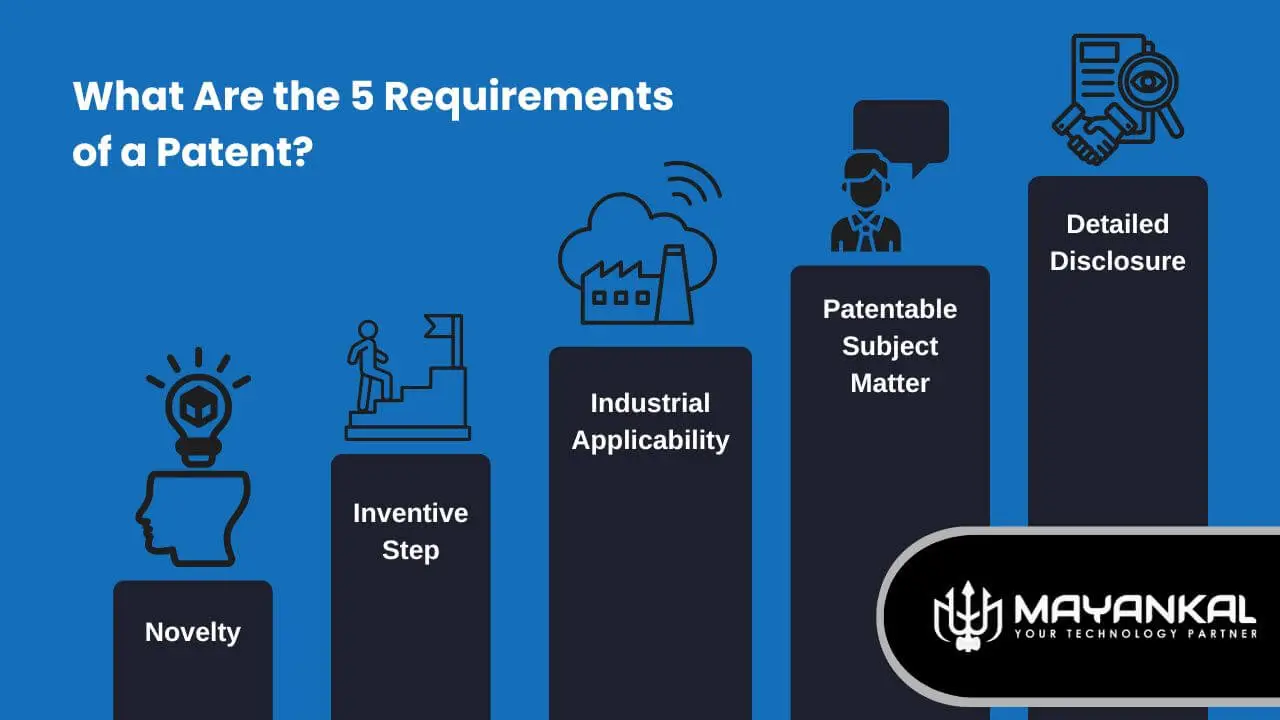
What Are the 5 Requirements of a Patent?
Your app should pass five main patentability requirements in order to effectively safeguard your innovation. These are there to make sure that legal protection is granted to inventions that are really new and useful.
1. Novelty
Your app should be absolutely new. Neither should it be disclosed, published, or utilized in any part of the world other than on your filing date. A similar available solution is also enough to reject it, and, therefore, a proper patent search is necessary.
2. Inventive Step (Non-Obviousness)
It must not be a simple notion to an individual possessing the same knowledge. It should show a visible technical development or a novel method of approach to a problem that is not readily predictable.
3. Industrial Applicability
The application should be used practically. It must be able to be created and applied to real-life situations, be it business, healthcare, education, or any other industry.
4. Patentable Subject Matter
A patent is not attached to all ideas. There is generally no permission for pure business methods, abstract concepts, or algorithms that have no technical use. Your app needs to show a technical contribution, such as a new process, system, or functionality.
5. Detailed Disclosure
You have to be able to describe to the fullest extent how your app works. This involves technical flow, architecture, logic, and features. Disclosure ought to be described in a way that is comprehensive, and that can be comprehended by another person who is competent in that field to replicate the invention.
What Is Rule 7 of Patent Rules?
The main issue of Rule 7 of the Patent Rules addresses the payment system of patent applications. It specifies the amount of money an applicant should pay at various stages of the process of patenting it, and enables keeping the system transparent and uniform.
It covers the following key aspects:
Filing fees based on applicant type
There are varying fee rates that apply to individuals, startups, small entities, and large entities. Individuals and startups have reduced costs.
Additional charges
There can be additional charges to your application in case it goes beyond the conventional page limit or has more claims than are permitted under the basic filing charge.
Stage-wise payment structure
The charges are determined on a per-step basis where, when filing, requests to publish, requests to examine, and renewal of the patent are charged.
Modes of payment and compliance
It also defines the mode of payment of fees and the consequences in case of late payments or defaults.
Can I Patent My Idea for Free?
Technically, no. Patenting anything will always come at some cost, be it government charges, documentation, or legal guidance. There exists no absolutely free path to patenting.
However, you can significantly reduce expenses by taking a few smart steps:
- File as an individual or startup. Indian Patent Office charges less than the large companies in terms of filing fees charged to individuals, startups, and small entities.
- Use government support schemes. There are several programs in India to subsidize or reimburse startups and innovators for patent filing.
- Prepare initial documentation yourself. In case you are able to write simple descriptions, flowcharts, and technical specifications by yourself, you will be able to reduce the initial costs.
How to Patent an App in India
The Indian patent system is clear and organized, and the Indian Patent Office controls it; therefore, it is easier to defend the ideas when the correct process is followed by the innovators and startups.
Here’s how the process works:
1. Draft the Patent Specification
This is among the most important. In your application, you need to describe your invention in a technical and detailed way. It typically includes:
- Title of the invention
- Abstract (a short summary)
- Detailed description explaining how the app works
- Claims that define what exactly you want to protect
2. File the Application
When all the paperwork is prepared, you have an opportunity to file your patent application online at the official IP India portal. It is now possible to decide, at this stage, whether to have a provisional application (to file early) or a full specification.
3. Publication
After filing, your application is published in the patent journal. This normally occurs after 18 months, although you can seek an early publication to hasten the process.
4. Request Examination
Filing alone is not enough. You must request an examination within 48 months from the filing date. Your application shall then be examined by the patent office.
5. Respond to Objections
During examination, the patent examiner may raise objections or request clarifications. They are presented in an examination report. You will have to answer cautiously with due technical and legal reasons in order to proceed.
6. Grant of Patent
In the event of all the requirements being met and objections being addressed, the patent is issued. Once granted, you have the right to your invention for 20 years from the date of filing.
How Mayankal Technologies Helps in Patent an App ?
The process of going through patents alone is not easily done, particularly in cases of technical documentation and legal conformity. That is where Mayankal Technologies offers viable end-to-end support to ease the process.
Expert Consultation
It begins with an in-depth analysis of your app idea. The team evaluates your idea in terms of patentability and advises you as to the best course of action before proceeding.
Technical Documentation
The success of a patent depends on good documentation. Mayankal Technologies helps you prepare:
- Detailed system architecture
- Flow diagrams and workflows
- Functional and technical descriptions
Patent Filing Support
The whole procedure is carried out with precision, starting with the provisional application up to the fully filed specification. This minimizes mistakes, and all formalities are addressed.
Legal Coordination
It is not only technical, but it is legal as well to file a patent. The team will liaise with patent lawyers to ensure your application is within the present legislation and regulations, which will enhance the possibility of being passed.
End-to-End Assistance
You receive full assistance with idea validation to the final patent grant. There is no need to handle different vendors, and all is done at the same location, which consumes less time and effort.
Final Thoughts
This is why, in the case that you are serious about protecting your innovation, it is a good move to have initiatives to patent mobile app idea concepts in 2026. Although the process takes time, planning, and certain investment, the long-term benefits make it worth the process.
Protecting your app concept ensures the good security of your idea, as well as creates credibility among investors, partners, and potential buyers. It helps to establish your status in the competitive market and transform your idea into a business resource instead of an idea.
It can make the process easier, minimize mistakes, and increase your approval rate when you have to cooperate with more experienced teams, such as Mayankal Technologies. The best thing is to do something at the beginning, write down your thoughts, and go through the proper way first.
FAQs
1. Can a mobile app idea be patented?
A mobile application concept in itself cannot be patented. Nevertheless, in case your application has a distinctive technical process, system, or functionality, it may be patented. It is always about the way the conception works, and not just the notion.
2. What is the step-by-step process to patent a mobile app idea?
The process begins with a patent search to ensure uniqueness, followed by preparing detailed technical documentation. You then file a provisional or complete patent application, request examination, and respond to objections before final approval is granted.
3. What types of patents apply to mobile app inventions?
Four key patents include utility, design, plant, and provisional. In the mobile apps context, utility patents are most applicable since they are used to secure functionality, and in some instances, design patents could be used to secure UI/UX.
4. What is the cost of patenting an app idea in India?
The price is different according to the complexity and professional assistance. Typically, it ranges from ₹20,000 to ₹1,00,000 or more. This will involve government charges, preparation, registration, and legal support during the patent filing.
5. Is it possible to sell a mobile app idea without a patent?
The answer to the question of whether you can commercially sell your app idea without a patent is yes, though at a risk. Lacking protection in the form of law, buyers might discourage or imitate the idea. A patent increases trust, strengthens negotiation power, and improves the overall value of your idea.
Hi, I’m Akhil Kumar Srivastava, Founder & CEO of Mayankal. We’re a team of highly skilled developers helping startups and established companies transform powerful ideas into successful digital products. We build high-quality websites, mobile apps, AI-driven tools, and full-scale SaaS solutions.
Our Blog
Explore Our Latest Multi-Location
Marketing Insights
11 May 2026
How Much Does LMS Development Cost in India in 2026?

Akhil Kumar Srivastava

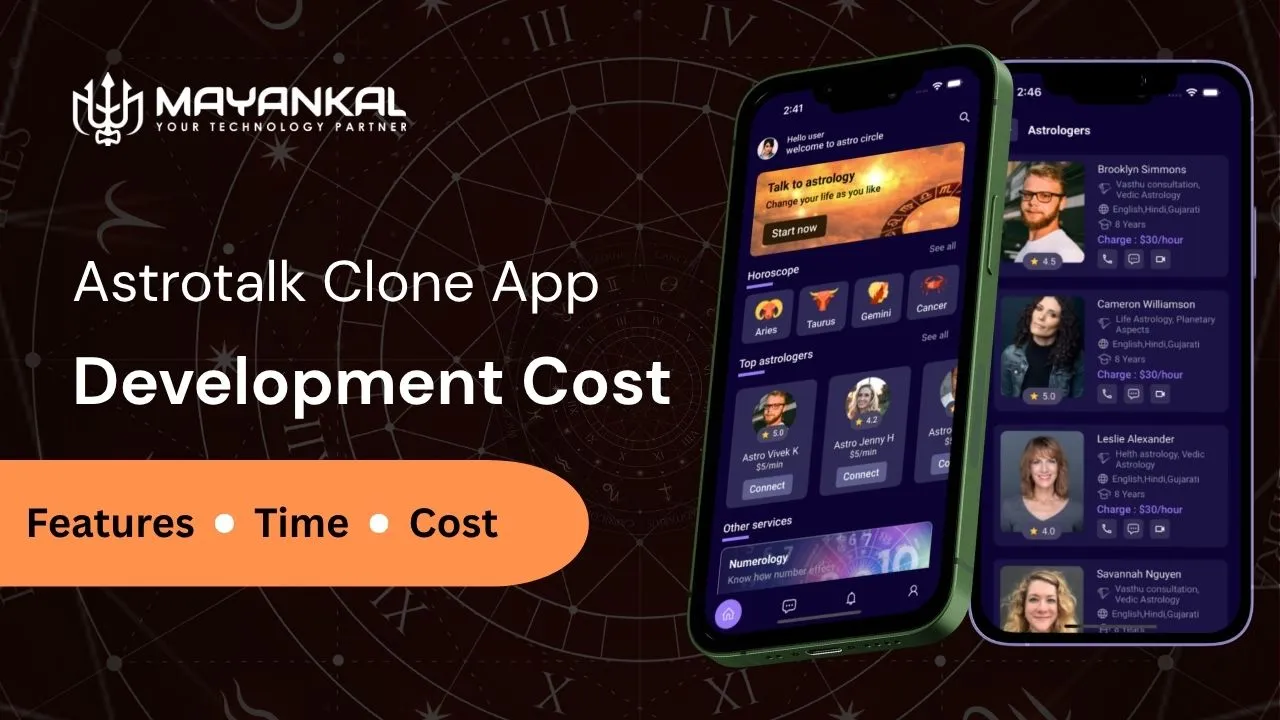
17 Apr 2026
Cost to Develop an Astrology App Like Astrotalk in 2026
Akhil Kumar Srivastava
04 Apr 2026
Top 10 No-Code Tools for Mobile App Development in 2026
Akhil Kumar Srivastava
23 Jan 2026
Detailed Guide on AI Agent Development Cost in 2026
Akhil Kumar Srivastava

09 Jan 2026
Gojek Business Model Complete Guide
Akhil Kumar Srivastava